

A teenager buying her first moisturizer. A 55-year-old exploring ergonomic chairs after a back injury. A new parent shopping for a car seat. A retiree learning to use a fitness app.
These people span different generations, but what drives their choices isn’t just age. It's a life stage.
Marketers often rely on generational targeting, and with good reason: generation shapes identity, values, and cultural context. But in many cases, lifecycle stage — i.e. what’s happening in someone’s life right now — is just as important, if not more.
Lifecycle thinking focuses on evolving needs: first jobs, first homes, family life, health changes, financial shifts. These transitions cut across generational lines and help explain how people discover, evaluate, and stay loyal to brands.
Asia’s Generational Spread Is Widening and Overlapping
Asia is home to both the world’s youngest and oldest populations. Countries like India and Indonesia have median ages under 30. Japan and South Korea, by contrast, are already over 45 and climbing¹.
This demographic shift isn’t just a statistic. It’s a signal that marketers need to design for a broader, more varied consumer base; one that spans multiple life stages, not just age brackets.
Youth Brings Momentum
Younger consumers play a vital role in discovery and trial. A study of 230 brands across 12 categories found that fast-growing brands tend to attract more young users². That’s not just because young people are risk-takers, but because they’re more open to uncertainty³. They try new products more often and form new habits more quickly.
That energy is essential for brand momentum, but it doesn’t always last.
Age Brings Depth
Older adults offer something different: clarity, loyalty, and spending power. As people age, they tend to make decisions more efficiently⁴ — not because they’re stuck in their ways, but because they’ve figured out what works.
In Japan, over-70s now hold more than 60% of household financial assets⁵. In China, over-60s are projected to drive nearly a third of consumption by 2050⁶. And they’re increasingly digital: 161 million Chinese internet users are now over 60⁷, and nearly half of U.S. adults over 50 use social media daily⁸.
Far from being a fringe segment, these consumers are helping define the mainstream.
Smart Brands Follow the Journey
Brands that thrive across age groups think beyond age. They track people through life stages:
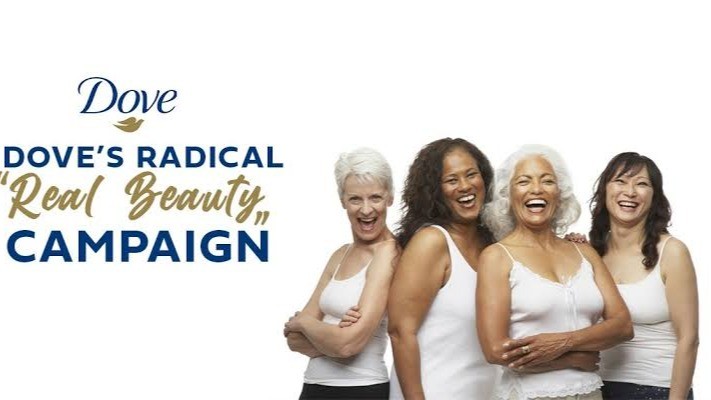
Dove weaves teens, parents, and older women into one emotional narrative around real beauty — no need to slice by generation.
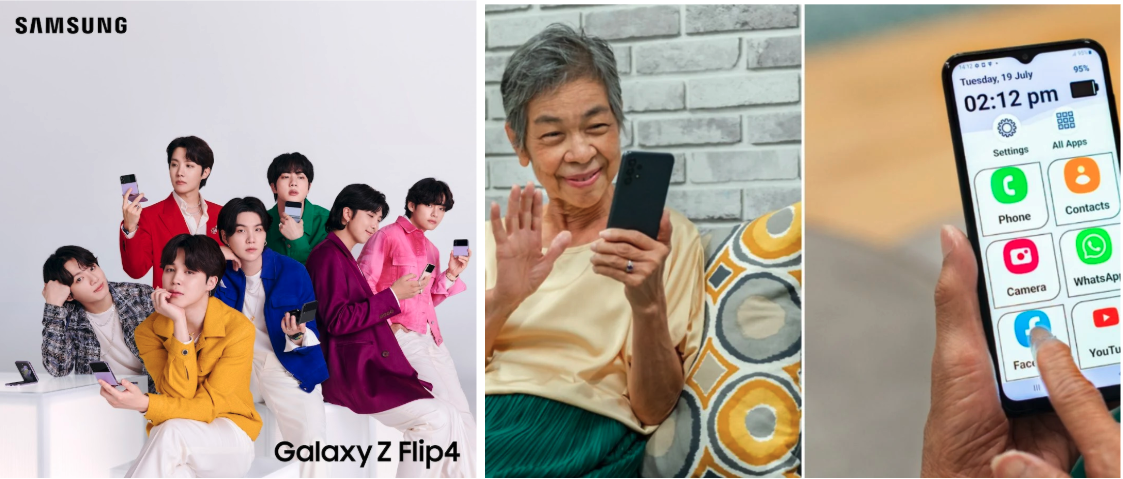
Samsung combines Gen Z-friendly collabs with senior-friendly accessibility features. The user experience flexes across age and need.
They’re not “targeting everyone”, they’re adapting to evolving roles and mindsets.
When to Use Lifecycle vs. Generation
Both generational and lifecycle approaches have strengths which often work best together. But some contexts favor one more than the other:
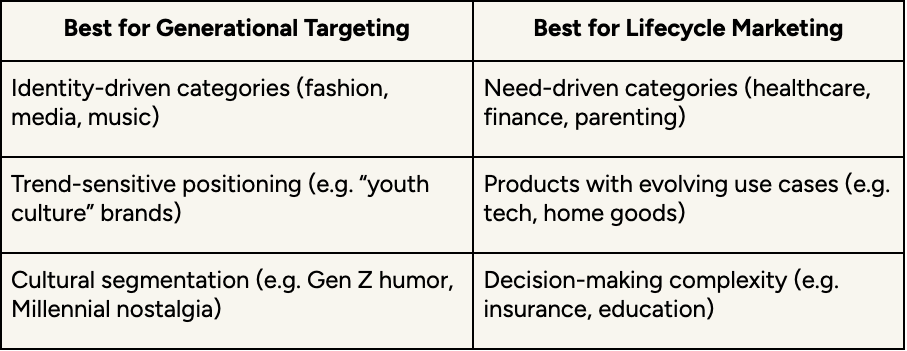
If you're launching a streetwear brand or a meme-heavy campaign, understanding Gen Z’s cultural lens matters. But if you’re designing a savings plan or a skincare line, knowing where someone is in their life — be it first job, parenthood, retirement — may be the sharper lens.
Growth Is Intergenerational
Youth brings energy. Age brings loyalty. One fuels brand trial, the other drives repeat usage and advocacy. Together, they shape long-term value.
So instead of asking, “Is this campaign for the young or the old?”, we might do better to ask: “Where is our audience in their journey, and how can we grow with them?”
Sources
- UN Population Division, World Population Prospects (2022 Revision)
- Anderson & Sharp, International Journal of Market Research, Vol. 52, Issue 4 (2010)
- Tymula et al., PNAS (2012)
- Eppinger et al., Neurobiology of Aging (2013)
- Bank of Japan (2022)
- McKinsey Global Institute (2020)
- CNNIC (2025)
- AARP Tech Trends Survey (2023)
- BCC Research (2024)
